Weekly Research Updates
Fresh findings on tuber and root crops.
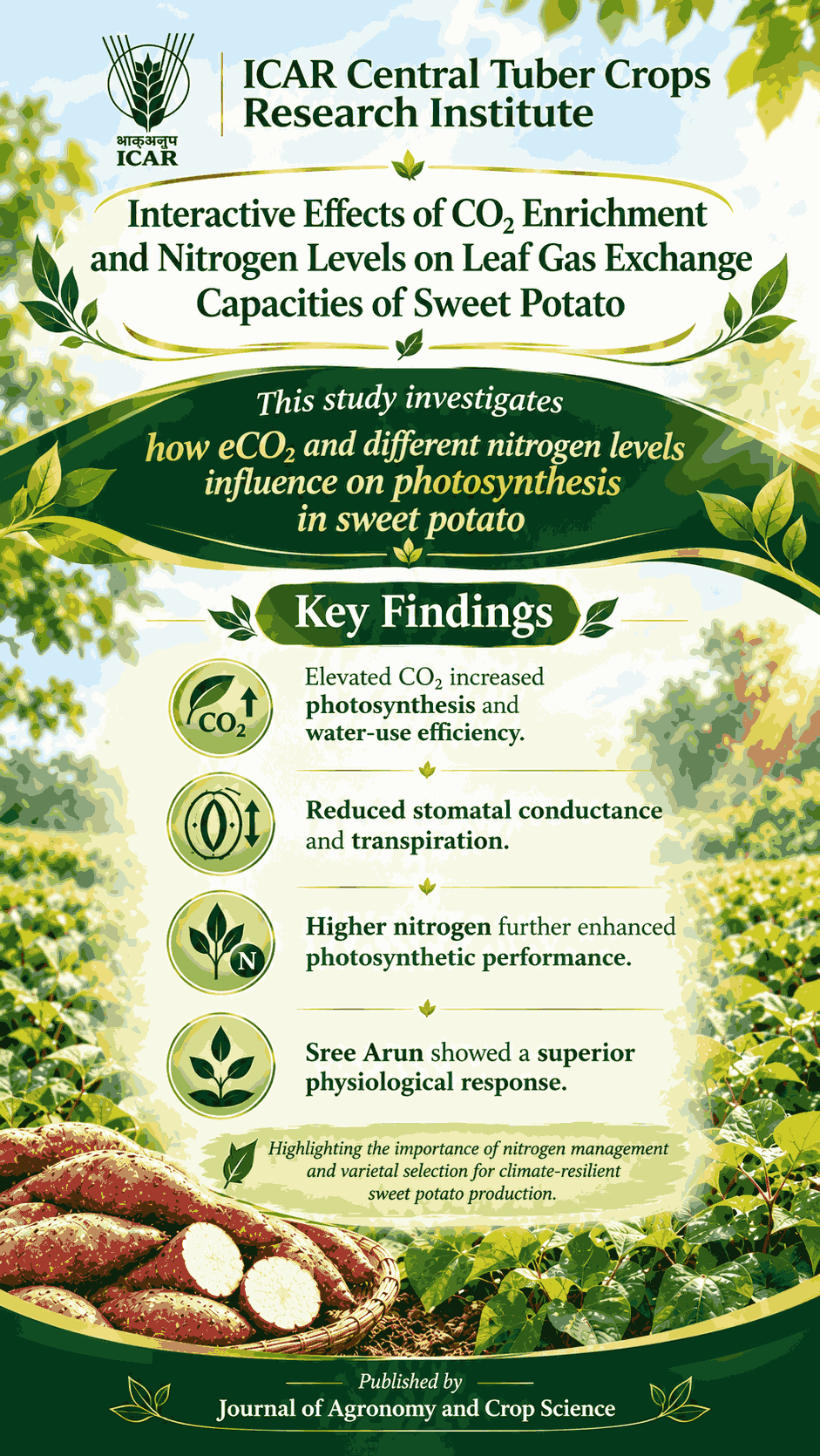
INTERACTIVE EFFECTS OF CO₂ ENRICHMENT AND NITROGEN LEVELS ON LEAF GAS EXCHANGE CAPACITIES OF SWEET POTATO
This study highlights how elevated CO₂ (400, 600, and 800 ppm) and nitrogen levels affect leaf gas exchange in sweet potato varieties Sree Arun and Sree Kanaka.
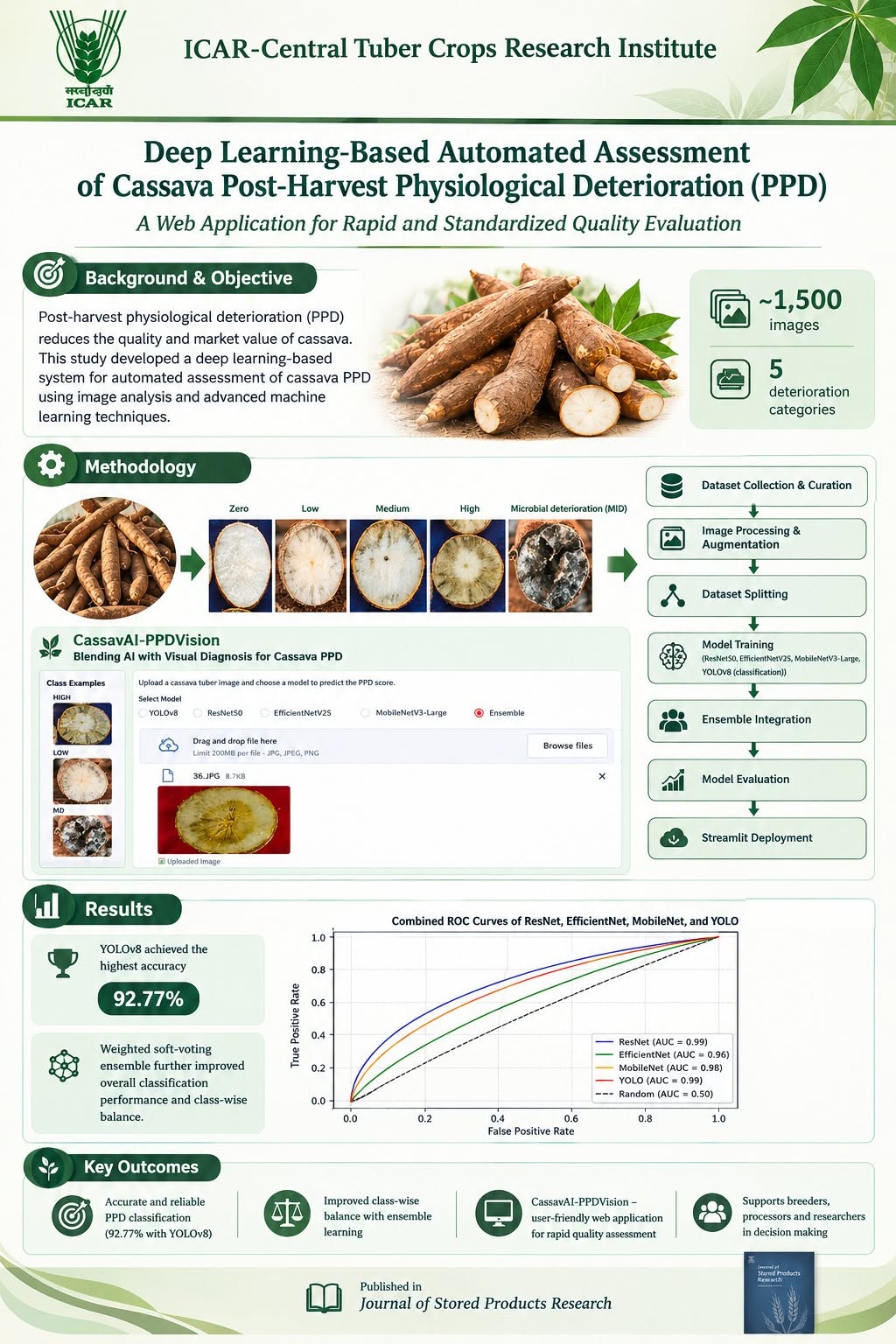
CassavAI-PPDVision: Smarter Cassava Quality Assessment
A deep learning-based system that enables rapid and standardized assessment of cassava post-harvest deterioration, with YOLOv8 achieving 92.77% accuracy.
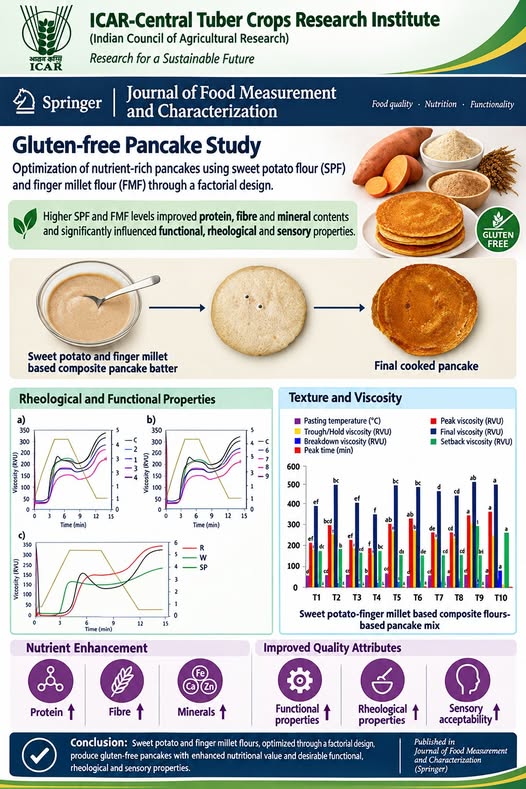
Gluten-Free Pancakes: Nutrition Meets Innovation
Exciting research on nutrient-rich gluten-free pancakes has been published in the Journal of Food Measurement and Characterization! 🎉 The study explored the use of Sweet Potato Flour (SPF) and Finger Millet Flour (FMF) to optimize gluten-free pancakes through a factorial design. 📖 Published in: Journal of Food Measurement and Characterization
Published in Crop Science
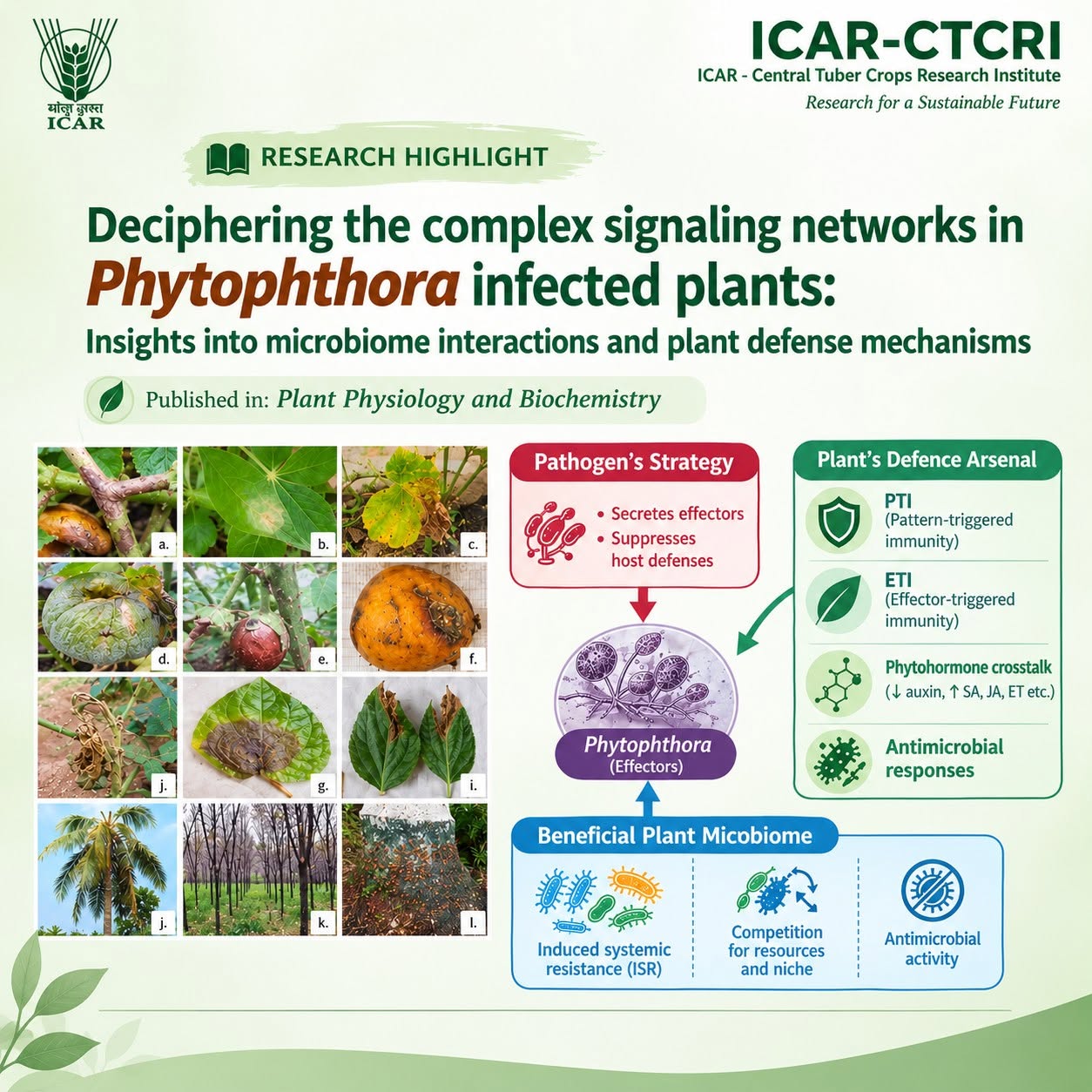
Deciphering the complex signaling networks in Phytophthora infected plants: Insights into microbiome interactions and plant defense mechanisms
This paper highlights the complex molecular interactions occurring during Phytophthora infection, focusing on plant immune signaling, phytohormone crosstalk and microbiome interactions. Phytophthora employs effectors to suppress host defenses, while plants activate PTI, ETI, hormonal signaling and antimicrobial responses. Beneficial members of the plant microbiome can enhance resistance through induced systemic resistance, competition and antimicrobial activity

Published in Crop Science
Exploring the Potential of Mexican Yam Bean 🌿
A promising, underutilized crop with nutrient-rich roots, nitrogen-fixing ability, and diverse applications in food, agriculture, pharmaceuticals, and cosmetics.
Research paper
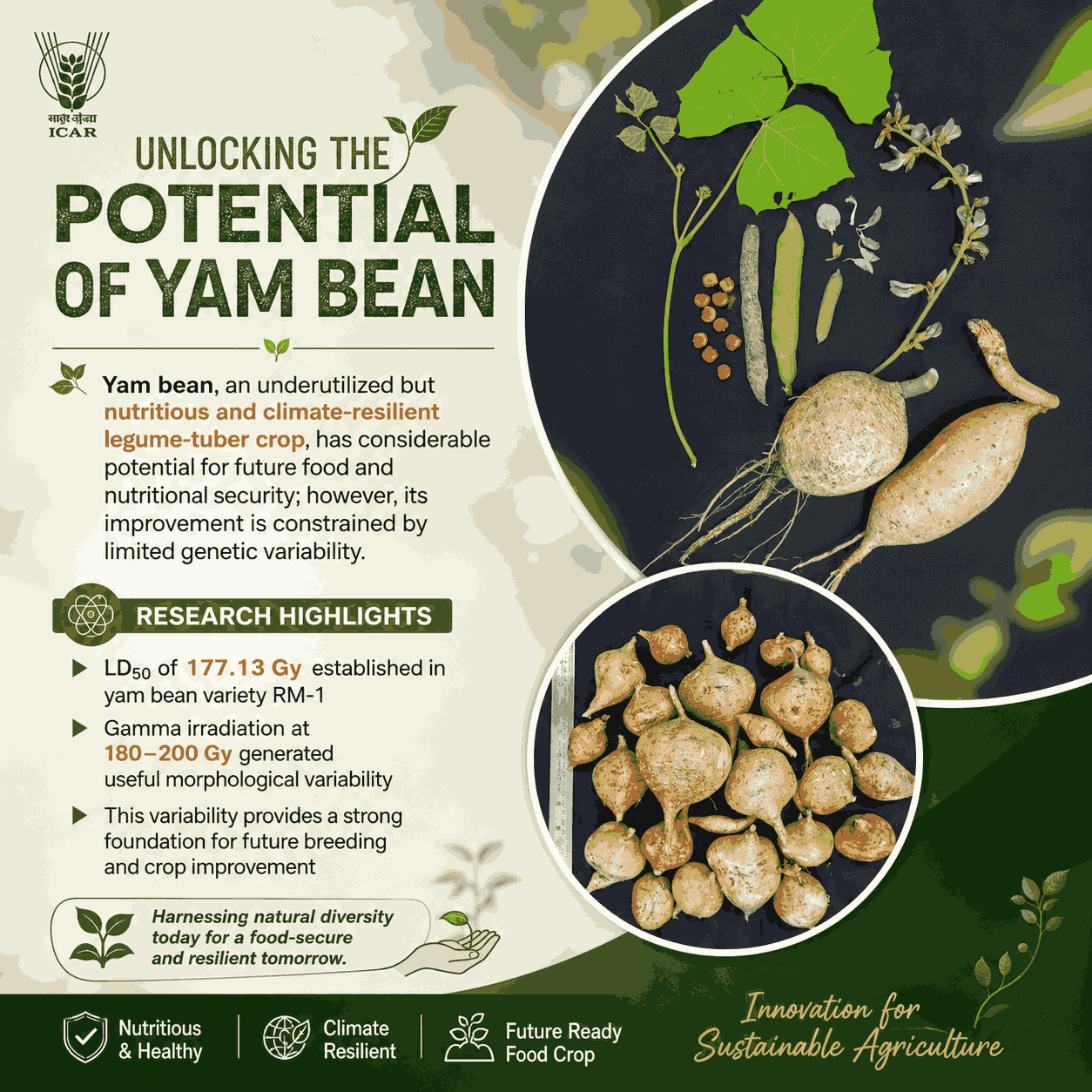
Engineering genetic diversity: Optimising gamma ray mutagenesis in yam bean variety RM-1 ✨
Yam bean holds promising potential as a nutritious, climate-resilient crop for future food and nutritional security. This research explores gamma-ray mutagenesis as a tool to generate useful genetic variability and support the development of improved traits.
Phenology
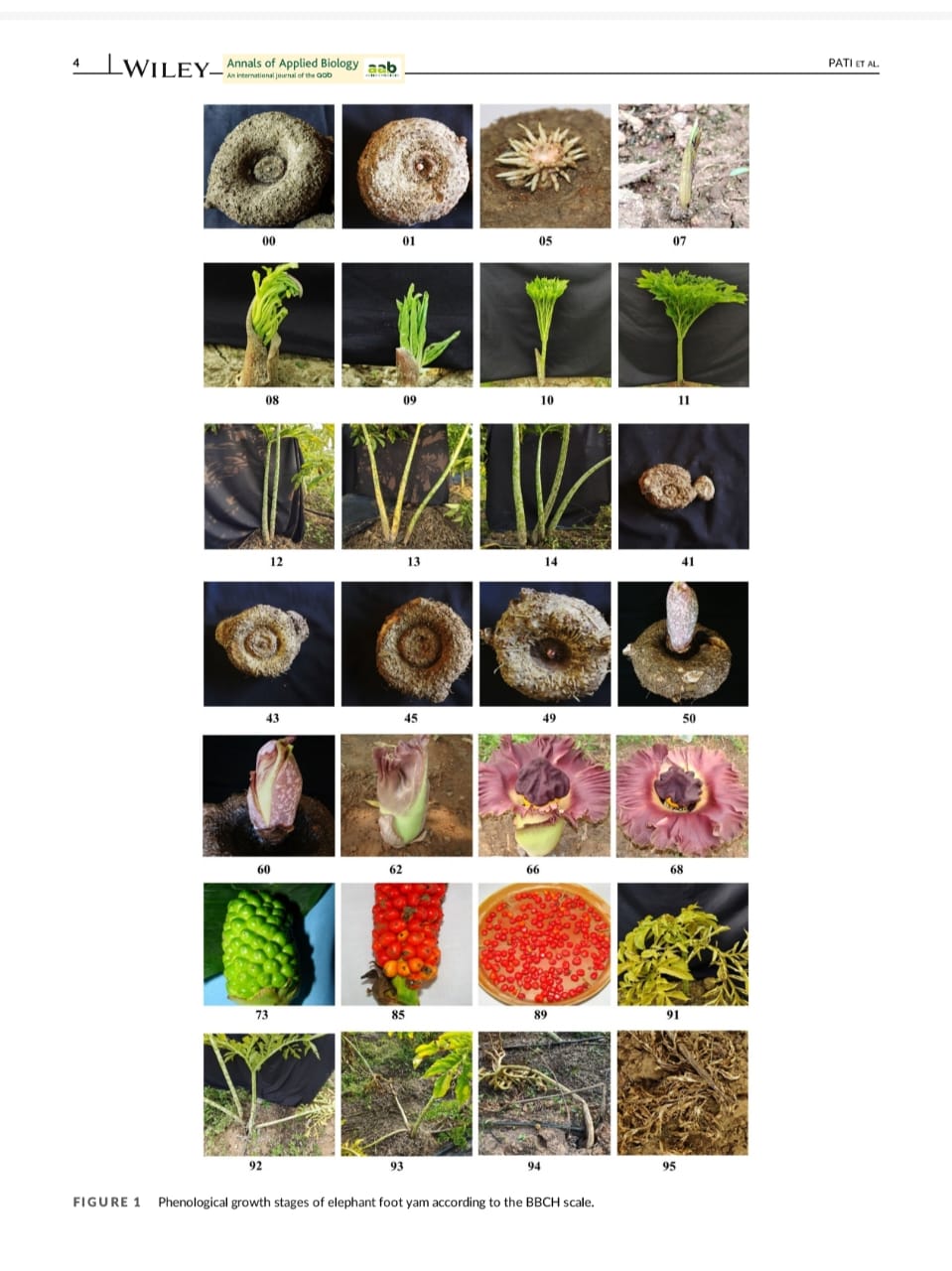
Phenophases in Elephant Foot Yam
Elephant foot yam (Amorphophallus paeoniifolius) is a tropical tuber crop grown mainly for its edible corm. Eight primary growth stages have been identified: germination, leaf/pseudostem development, tuber development, inflorescence emergence, flowering, fruit growth, fruit maturity, and senescence. The BBCH scale gives agronomists, breeders, germplasm curators, and researchers a standard way to manage, develop, and conserve the genetic resources of this crop.